Tarbosaurus Description
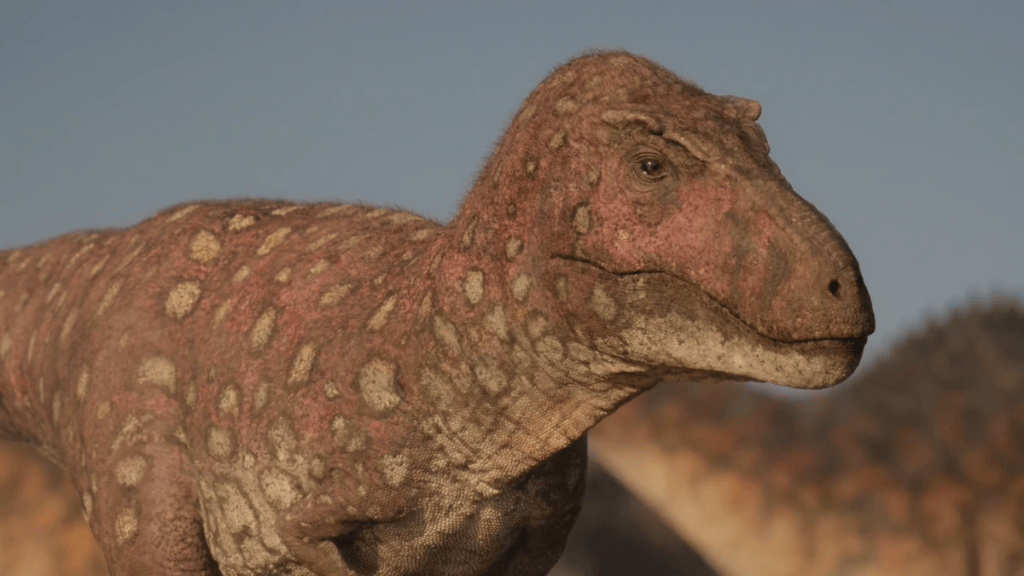
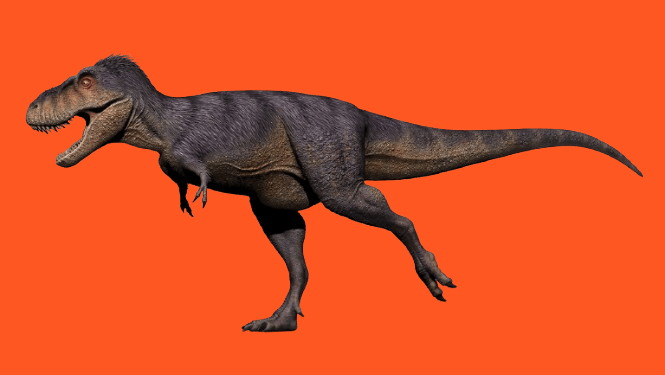
Tarbosaurus was a massive apex predator that dominated the floodplains of Asia during the Late Cretaceous period. As a close relative of Tyrannosaurus rex, this formidable theropod possessed a large, robust skull armed with dozens of sharp, blade-like teeth designed for crushing bone and slicing flesh. It walked on two powerful hind legs, balanced by a long, heavy tail that acted as a counterweight during locomotion. Despite its immense size and strength, Tarbosaurus is particularly famous for its remarkably small, two-fingered forelimbs, which were even more shrunken and structurally reduced than those of its North American cousin. Its forward-facing eyes provided a degree of binocular vision, though its sensory strengths likely relied heavily on an exceptional sense of smell to track down large herbivorous prey like sauropods and hadrosaurs.
Could You Outrun a Tarbosaurus?
Tarbosaurus was a massive apex predator that dominated the floodplains of Asia during the Late Cretaceous period. As a close relative of Tyrannosaurus rex, this formidable theropod possessed a large, robust skull armed with dozens of sharp, blade-like teeth designed for crushing bone and slicing flesh. It walked on two powerful hind legs, balanced by a long, heavy tail that acted as a counterweight during locomotion. Despite its immense size and strength, Tarbosaurus is particularly famous for its remarkably small, two-fingered forelimbs, which were even more shrunken and structurally reduced than those of its North American cousin. Its forward-facing eyes provided a degree of binocular vision, though its sensory strengths likely relied heavily on an exceptional sense of smell to track down large herbivorous prey like sauropods and hadrosaurs.
Are You Bigger Than a Tarbosaurus?
You are drastically smaller than a Tarbosaurus. This Late Cretaceous giant was one of the largest tyrannosaurids to ever walk the Earth, reaching lengths of 33 to 40 feet (10 to 12 meters) and standing roughly 10 feet (3 meters) tall at the hips. Fully grown adults weighed between 4 and 6 metric tons, making them comparable in mass to a modern African elephant. Compared to a human, a single Tarbosaurus skull was over 4 feet long and packed with around 60 bone-crushing teeth, meaning an adult human would look incredibly small standing next to this ancient predator.
Fun Facts
- The species name bataar is actually a permanent scientific misspelling. The original namer intended to use the Mongolian word baatar, which translates to “hero”
- It possessed the smallest arms relative to body size of any large tyrannosaurid. Its forelimbs were even more shrunken and structurally reduced than those of its famous North American cousin, the T. rex
- Unlike the forward-facing eyes of T. rex, this dinosaur had eyes that faced more to the sides. It had reduced binocular depth perception and instead relied heavily on an exceptional sense of smell to track its prey.
- Its skull structure was rigidly reinforced with a unique jaw-locking mechanism. This adaptation allowed it to handle the extreme physical stress of hunting and biting massive long-necked sauropods.
- The name Tarbosaurus originates from Ancient Greek words meaning “alarming lizard” or “terrifying lizard”
Dino-mite Equations!
Question #1: If an average adult Tarbosaurus weighs 5 metric tons and a large African elephant weighs 5 metric tons, what is their combined weight in kilograms?
Answer #1
10,000 kg!
Question #2: If a hungry Tarbosaurus sprints at its estimated top speed of 24 miles per hour for exactly 5 minutes while chasing down prey, how many miles will it cover?
Answer #2
2 miles!