Kentrosaurus Description
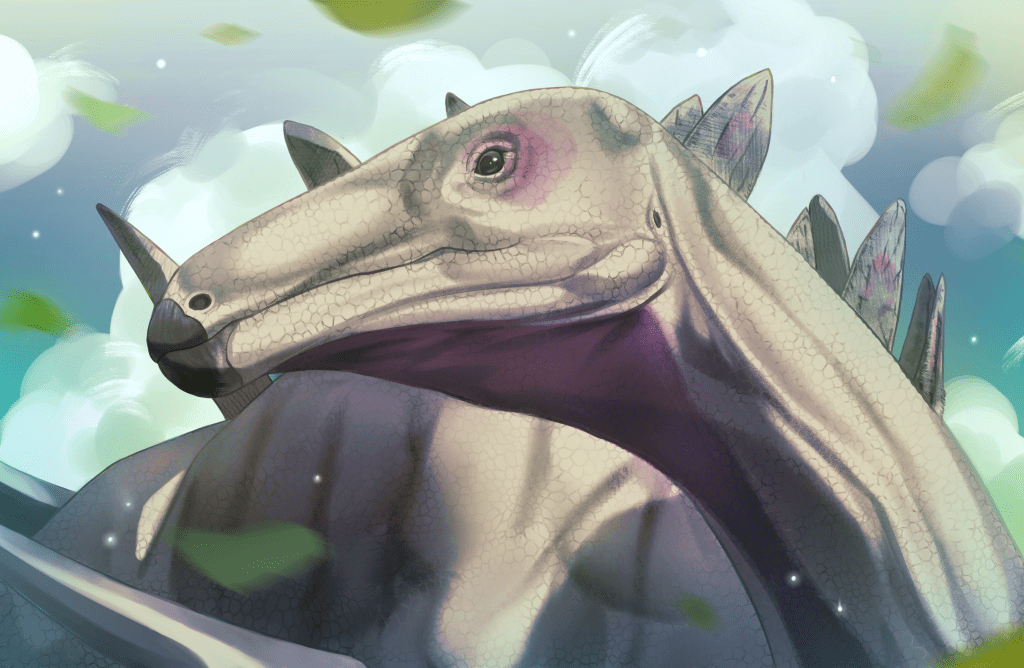
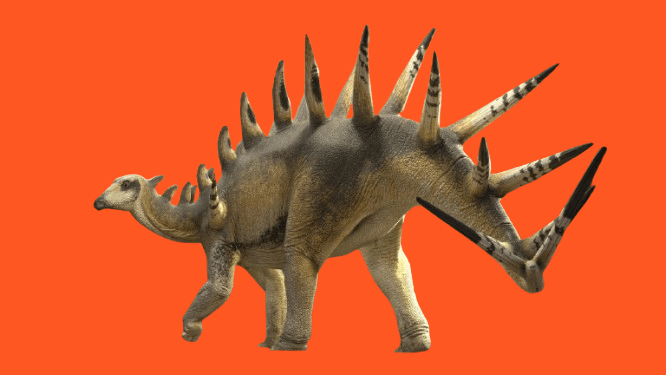
Kentrosaurus was a smaller, four-legged plated dinosaur with a double row of flat plates on its upper back that transitioned into long, sharp spikes along its lower back, hips, and tail. It also featured a distinct pair of long spikes on its shoulders.
Could You Outrun a Kentrosaurus?
Yes, you could easily outrun a Kentrosaurus on foot. Biomechanical models estimate its top running speed was only 5 to 8 km/h (3 to 5 mph). Its heavy build and short forelimbs restricted it to a slow walk or light trot. An average human jogs between 8 and 12 km/h (5 to 7.5 mph), easily leaving it behind. However, you could never outrun its reflexes. The Kentrosaurus could swing its flexible, spike-covered tail in a wide 180-degree defensive arc. The deadly spikes at the tip of the tail clocked a striking speed of 40 to 50 km/h (25 to 31 mph). This speed was more than enough to shatter the skull of any pursuing predator.
Are You Bigger Than a Kentrosaurus?
No, a Kentrosaurus was much larger than any human. Typical adults grew to a length of 4 to 4.5 meters (13 to 15 feet). They stood roughly 1.5 to 2 meters (5 to 6.6 feet) tall at the hips. Spike Lizard: Its name translates directly from Greek to mean “sharp-point lizard”.Thagomizer Switch: Bony armor plates on its neck shifted into 2-foot-long spikes along its lower back and tail.Spike Wall: They likely traveled in herds to create a unified wall of swaying spikes against large predators.Tiny Brain: Despite its size, its brain was exceptionally small, roughly the size of a walnut.Dimorphism: Thigh bone fossils show two distinct builds, meaning one sex was noticeably stouter than the other.
Fun Facts
- Its name translates directly from Greek to mean “sharp-point lizard”.
- Bony armor plates on its neck shifted into 2-foot-long spikes along its lower back and tail.
- They likely traveled in herds to create a unified wall of swaying spikes against large predators.
- Despite its size, its brain was exceptionally small, roughly the size of a walnut.
- Thigh bone fossils show two distinct builds, meaning one sex was noticeably stouter than the other.
Dino-mite Equations!
Question #1: If an average human adult weighs 80 kg and a large adult Kentrosaurus weighs 1,600 kg, how many humans does it take to equal the weight of one Kentrosaurus?
Answer #1
20!
Question #2: If a Kentrosaurus can swing its defensive tail at a velocity of 50 km/h but can only walk forward at a top speed of 5 km/h, how many times faster is its tail strike than its foot speed?
Answer #2
10 times faster!