
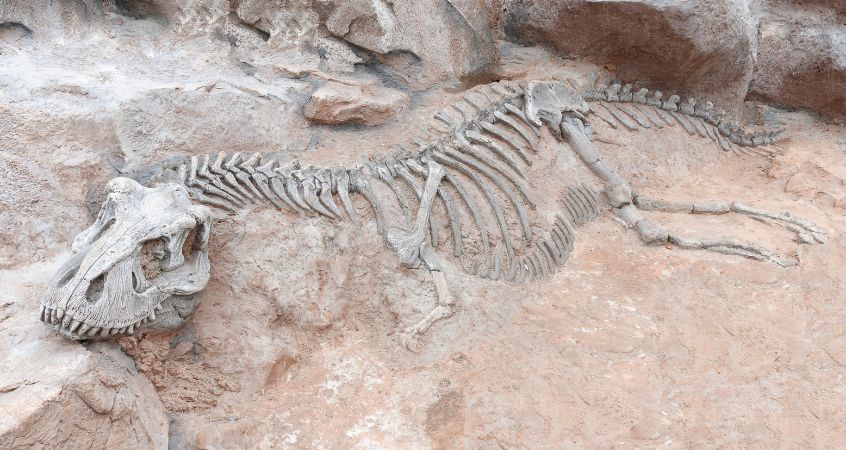
What Is Fossilization?
Fossilization is the process where organic material (like bones, shells, or plants) becomes a fossil, which is a rock-like copy of the original remains of the material. This involves the remains being buried, protected from decay, and gradually being replaced by various minerals over a long period of time.
What are the Steps of Fossilization?
There are five main steps to Fossilization. Starting with the death of an organism, then burial, lithification, petrification, and finally exposure. The organism can die of any means and then must decompose. Hard parts of the organism must carefully be covered by natural sediment and then must remain under the sediment for a very long time. Next, water must fill in the porous holes which will then weather away the actual bone, leaving the sediment that has been encasing the bones left to be discovered. The sediment is almost a replica of the original hard parts. This process can happen to any organism including animals, plants, mushrooms, and more.
How Does Fossilization Help us Understand the Creatures of the Past and Science?
Fossilization can help us understand the creatures of the past by telling us for one, that these animals existed at all, and other things like what they ate, what other organisms they interacted with, when they lived, and where they lived. This can also explain science by contributing to advances in various fields like geology , biology, archaeology, climate science, and of course paleontology. The more things that can be discovered through these advances will help grow our understanding of the planet, its history, its organisms, and ourselves. Through fossilization, we can expand our knowledge of the world.


